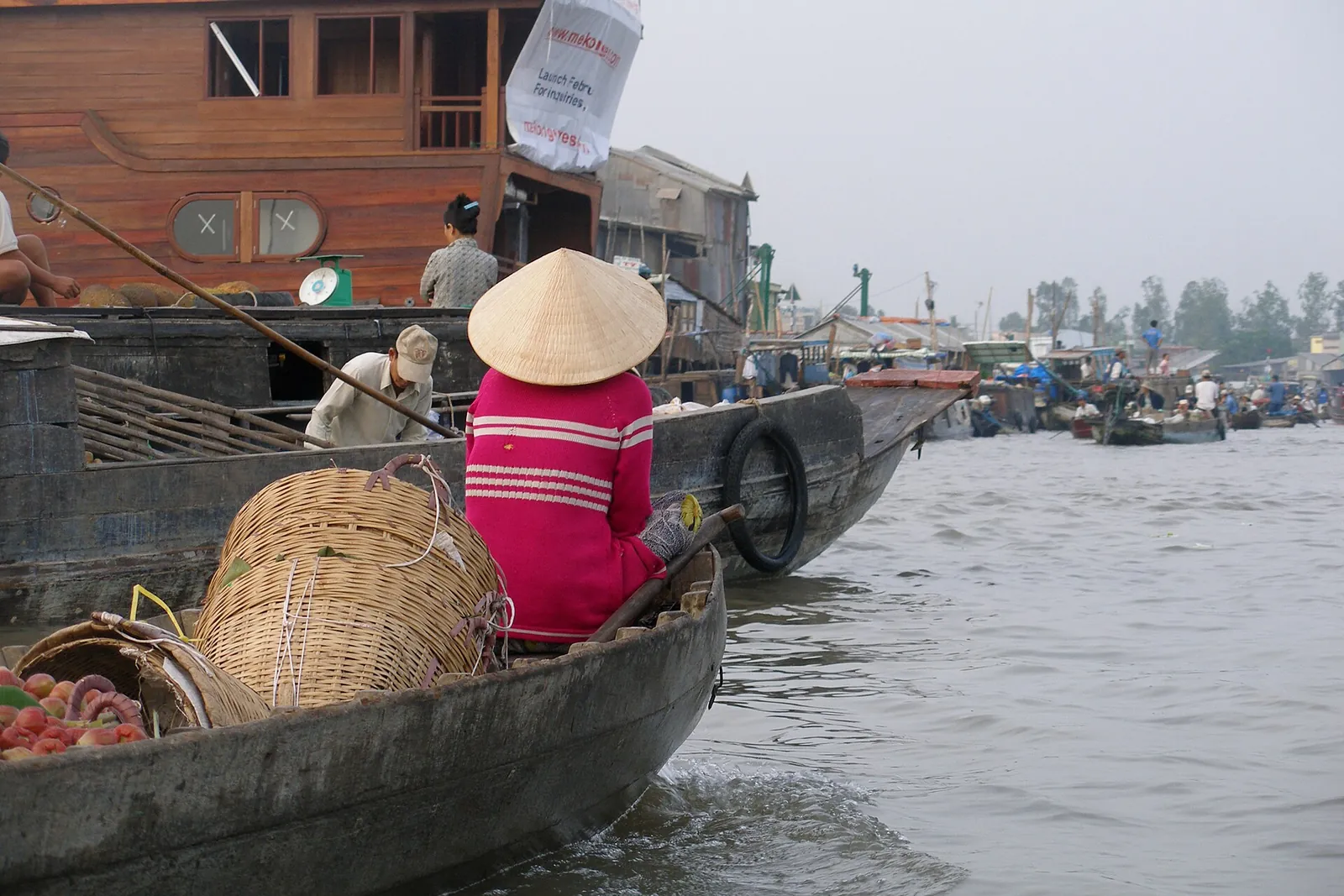
The Mekong Delta is the part of Vietnam most people see badly. The standard day trip out of Ho Chi Minh City spends about six hours on a coach, ninety minutes on a boat, and drops you at a coconut-candy workshop and a bee farm that exist entirely for tour buses. You come home saying the delta was fine. The delta was not fine. You did not see it.
This is the region where a third of Vietnam’s food grows, where the roads give way to water and the markets float, and where the pace is slower than anywhere else in the country. It rewards one thing above all: an overnight. Here is what each version of the trip actually gives you, and how to choose.
Day trip or overnight, the honest comparison
| Day trip | Overnight | |
|---|---|---|
| Time on transport | Most of it | Half of day one |
| Floating market | Usually not, or a token one | Yes, at dawn, properly |
| Feel | Attraction stops | Actual region |
| Best for | Tight itineraries | Anyone with a spare day |
The single biggest difference is the floating markets, and it is a scheduling problem rather than a preference. The real ones operate at dawn and are winding down by mid-morning. A coach leaving Ho Chi Minh City at eight in the morning cannot physically get you there in time. If the floating market is why you are going, you have to sleep in the delta. There is no way around this.
If you genuinely only have a day, go anyway, but go with adjusted expectations: treat it as a boat ride through beautiful water-country with some staged stops, not as an encounter with delta life.
Where to base yourself
Can Tho is the main city of the delta and the usual overnight base. It is a proper working city rather than a village, with a pleasant riverfront, good food, and the two best-known floating markets within reach. If you are doing one night, do it here.
Ben Tre and the surrounding coconut country are closer to Ho Chi Minh City and quieter, better suited to homestays and cycling through orchards than to markets. This is the gentler, greener version of the delta.
Chau Doc, up near the Cambodian border, is the one for travellers continuing on to Phnom Penh by boat, which is a genuinely lovely way to cross a border.
The floating markets, and managing expectations
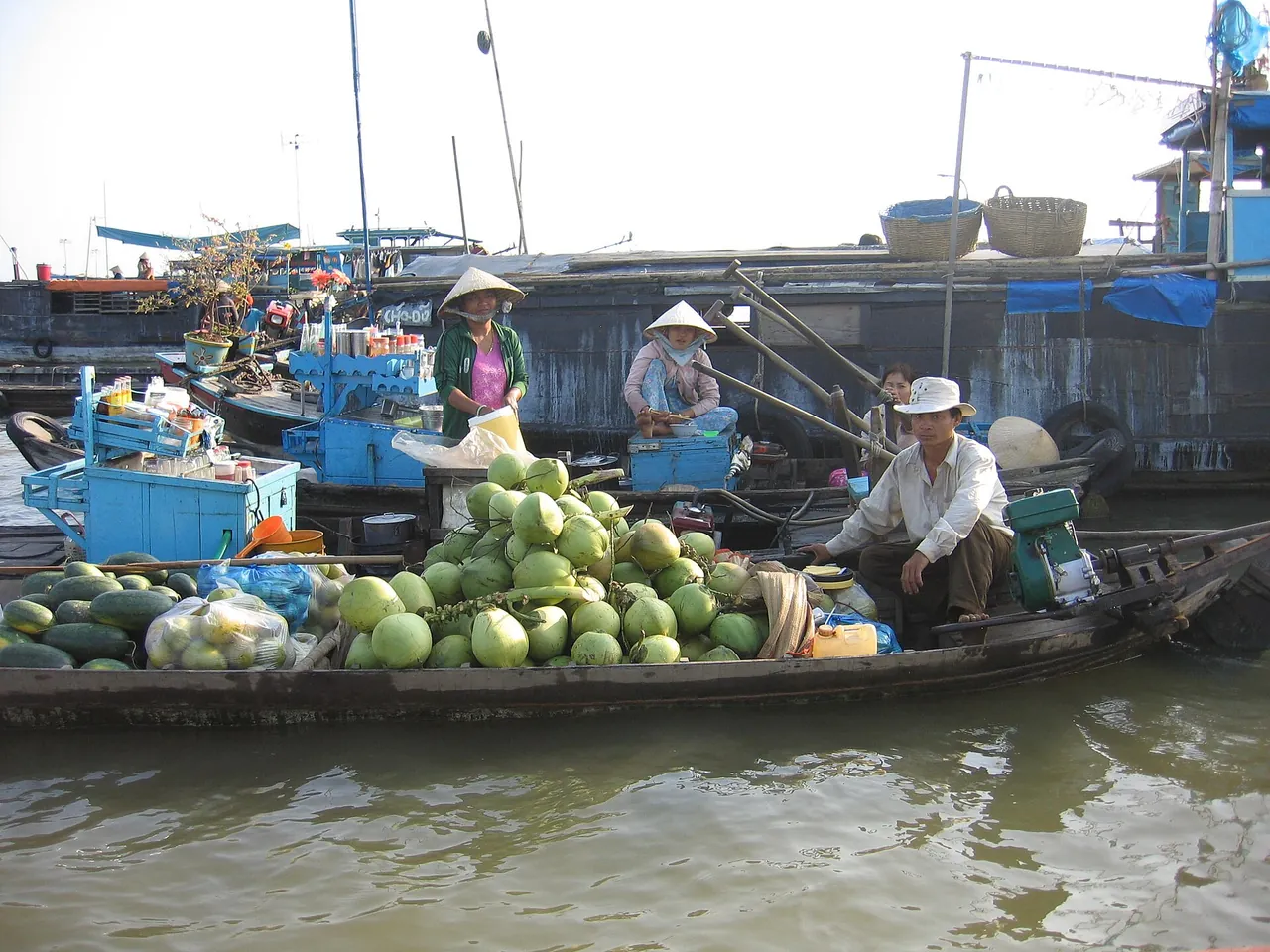
The markets are the delta’s signature image and they are genuinely remarkable: boats piled with pineapples and pumpkins and cabbages, each hanging a sample of what it sells from a tall pole so buyers can see from a distance. That pole system is the part that stays with you.
Two honest caveats. First, these are working wholesale markets, and they have shrunk in recent years as roads and bridges have improved across the delta, which is progress for the people who live here and a loss for the postcard. Second, some smaller markets are now largely sustained by visitors. The bigger ones near Can Tho remain real trade.
Go with a small boat rather than a large one. You can get in among the traders, buy a coffee poured from a flask on a boat that comes alongside, and actually see what is happening.
What else the delta is for
Beyond the markets, the delta is best experienced at ground level rather than ticked off.
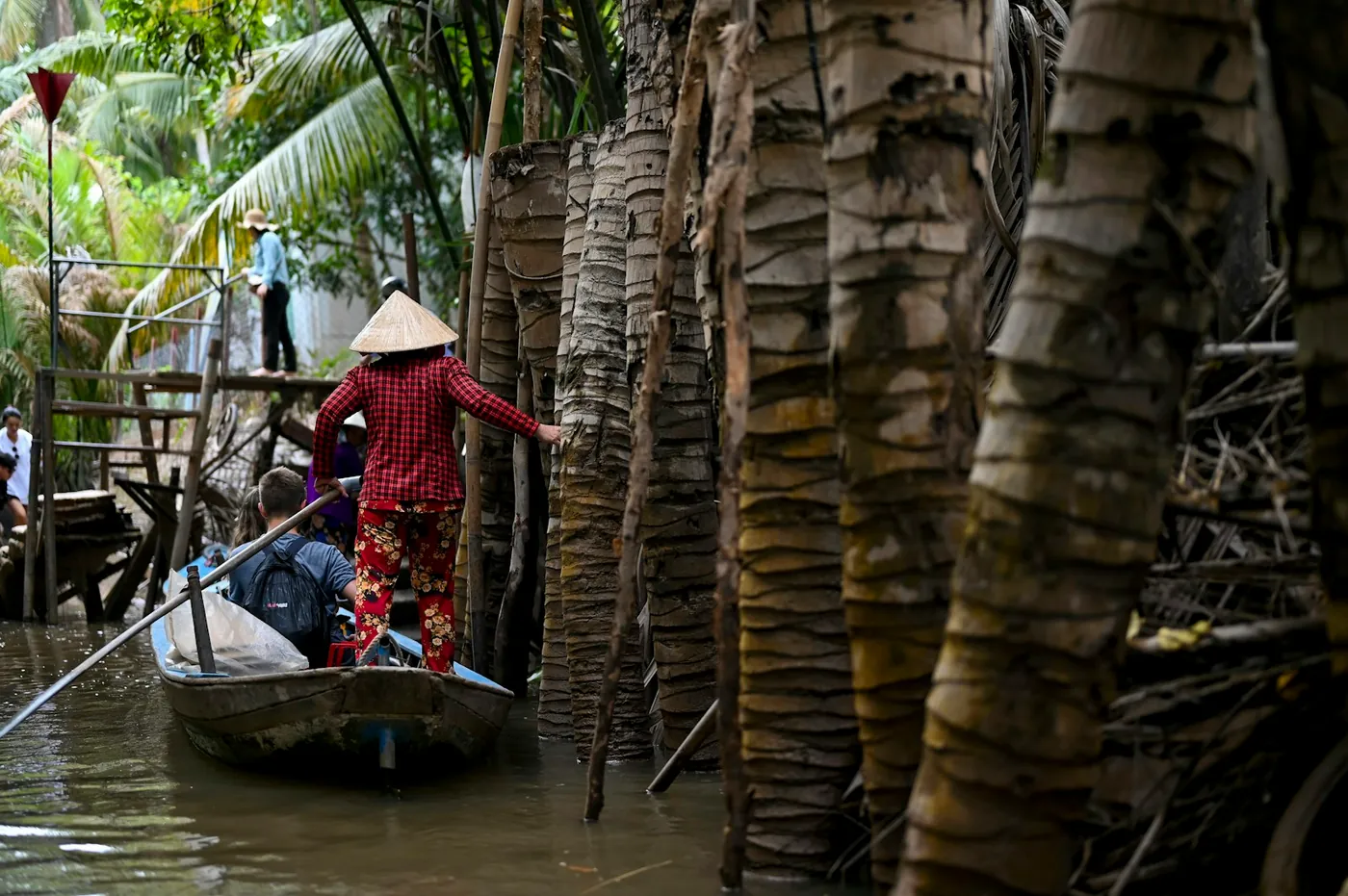
Cycling through the orchard lanes around Ben Tre or Vinh Long is flat, shaded and quiet, and it is the single best way to feel the place. Homestays are widespread and often genuinely family-run, with dinner cooked in the house. Small-boat channels, the narrow palm-lined ones rather than the main river, are where the rowing boats go and where it goes suddenly, completely silent.
The food is its own reason. Delta cooking leans sweeter and more herbal than the rest of the country, heavy on freshwater fish, coconut, and an enormous variety of fruit. Elephant ear fish served upright at the table and wrapped into rice paper is the local set-piece. If you have been eating your way down the country from the north, the contrast with the restrained Hanoi kitchen is dramatic, and this is where the southern sweetness reaches its furthest point.
Small-group beats big-coach hereCompare overnight delta trips that actually reach the dawn markets. Small-group beats big-coach hereCompare overnight delta trips that actually reach the dawn markets.Getting there and getting around
Most people come from Ho Chi Minh City, and it is the natural launching point. Our Ho Chi Minh City guide covers where to stay before an early start, which matters more than it sounds when you are leaving at dawn.
Buses run frequently and cheaply to Can Tho and the other delta towns, and the roads have improved enormously. Private cars and small-group transfers cost more and save real time. Once you are in the delta, boats do what roads do elsewhere, and every guesthouse can arrange one.
Allow more time than the map suggests. Distances look short and journeys are slow, because the delta is stitched together by ferries, bridges and small roads.
When to go
The delta has a wet season and a dry season like the rest of the south, and both work. The wet months bring the floodwaters that make the region what it is, the landscape is at its greenest, and the rain typically falls as a heavy afternoon burst rather than an all-day grey. The dry months are easier for cycling and more comfortable underfoot.
The fruit harvest is a genuine draw if you time it, with the orchards at their most abundant in the warmer months. Our guide to the best time to visit Vietnam sets out how the southern calendar works and why it does not line up with the north.
One practical note whatever the month: mosquitoes are a real presence here in a way they are not in the cities. Bring repellent, and take the usual precautions if you are staying overnight in a homestay with open windows.
So what should you book?
If you have a spare night, spend it in Can Tho, get on a small boat before sunrise, and give the delta a proper morning. That is the trip people remember.
If you truly cannot spare the night, book a small-group day trip rather than a large coach one, accept that the floating market will not be part of it in any real sense, and enjoy the boat ride and the orchards for what they are.
What I would not do is book the cheapest full-day coach tour and then conclude that the Mekong Delta is overrated. That conclusion is about the tour, not the delta.
Have you done the overnight, and which town did you base in? Tell me in the comments, the delta is big and I am always after another recommendation.