Ho Chi Minh City carries the weight of the Vietnam War more visibly than anywhere else in the country, and two sites in particular are where most visitors go to engage with it directly: the War Remnants Museum and the Reunification Palace. Both are widely visited, both are genuinely worth your time, and both deserve to be approached with a degree of care rather than treated as another stop on a sightseeing checklist. This guide covers what each place actually contains, what to expect emotionally, and how to visit respectfully. If you are building out a wider itinerary for the city, our Ho Chi Minh City guide covers the rest of what the city offers alongside this history.
A note before you go. Some of what follows describes exhibits that include distressing subject matter, including the effects of war and chemical weapons on civilians. We have kept descriptions general rather than graphic, but the museum itself does not, and it is worth knowing that before you walk in.
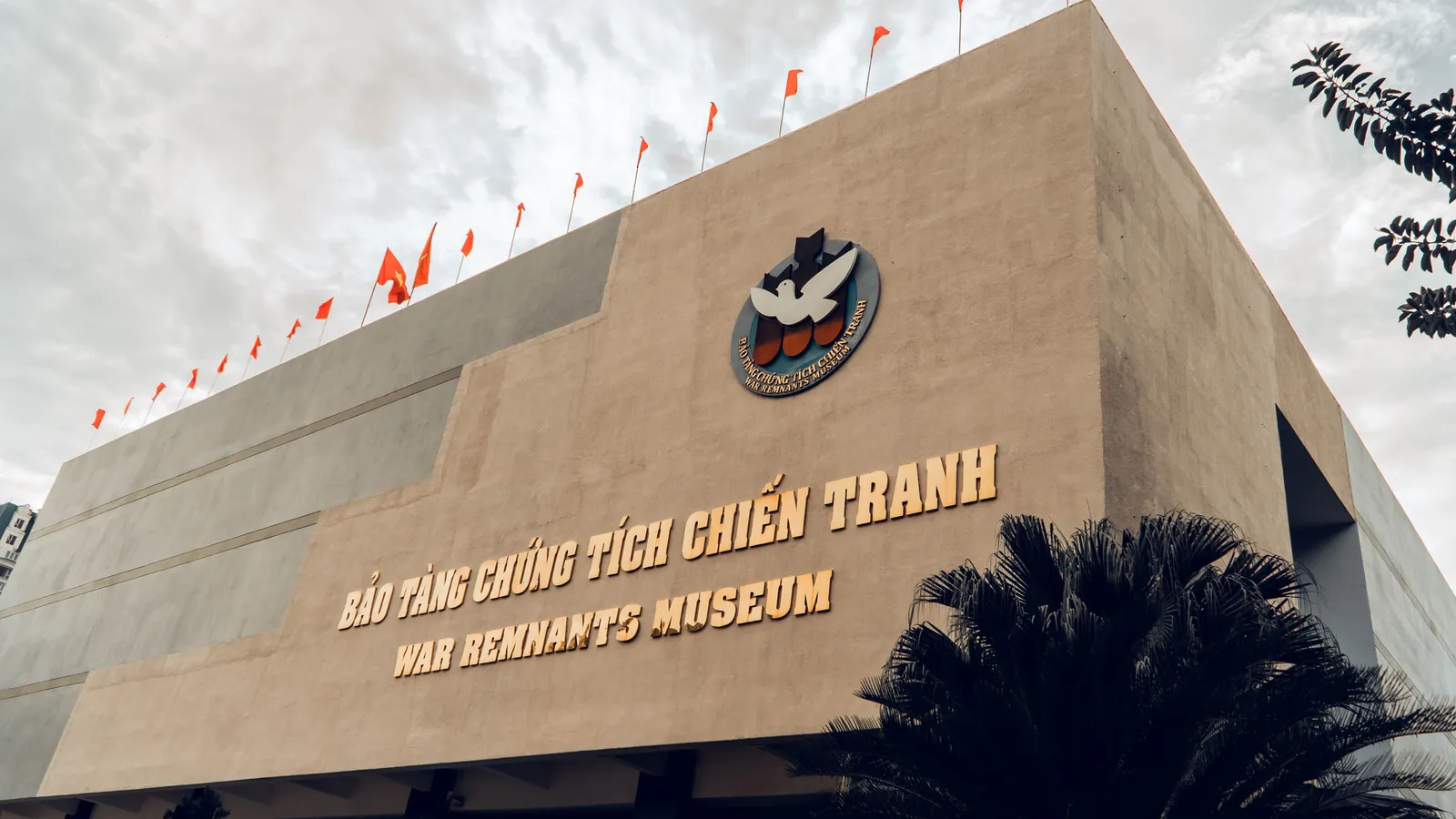
The War Remnants Museum
The War Remnants Museum, in central Ho Chi Minh City, is the country’s most visited museum dedicated to the conflict the rest of the world generally calls the Vietnam War and Vietnam calls the American War. It is presented from the Vietnamese perspective, and it does not claim to be a neutral, multi-sided account. Knowing that in advance changes how you experience it, and it is worth treating the museum as one significant perspective on a long and complicated conflict rather than the only one.
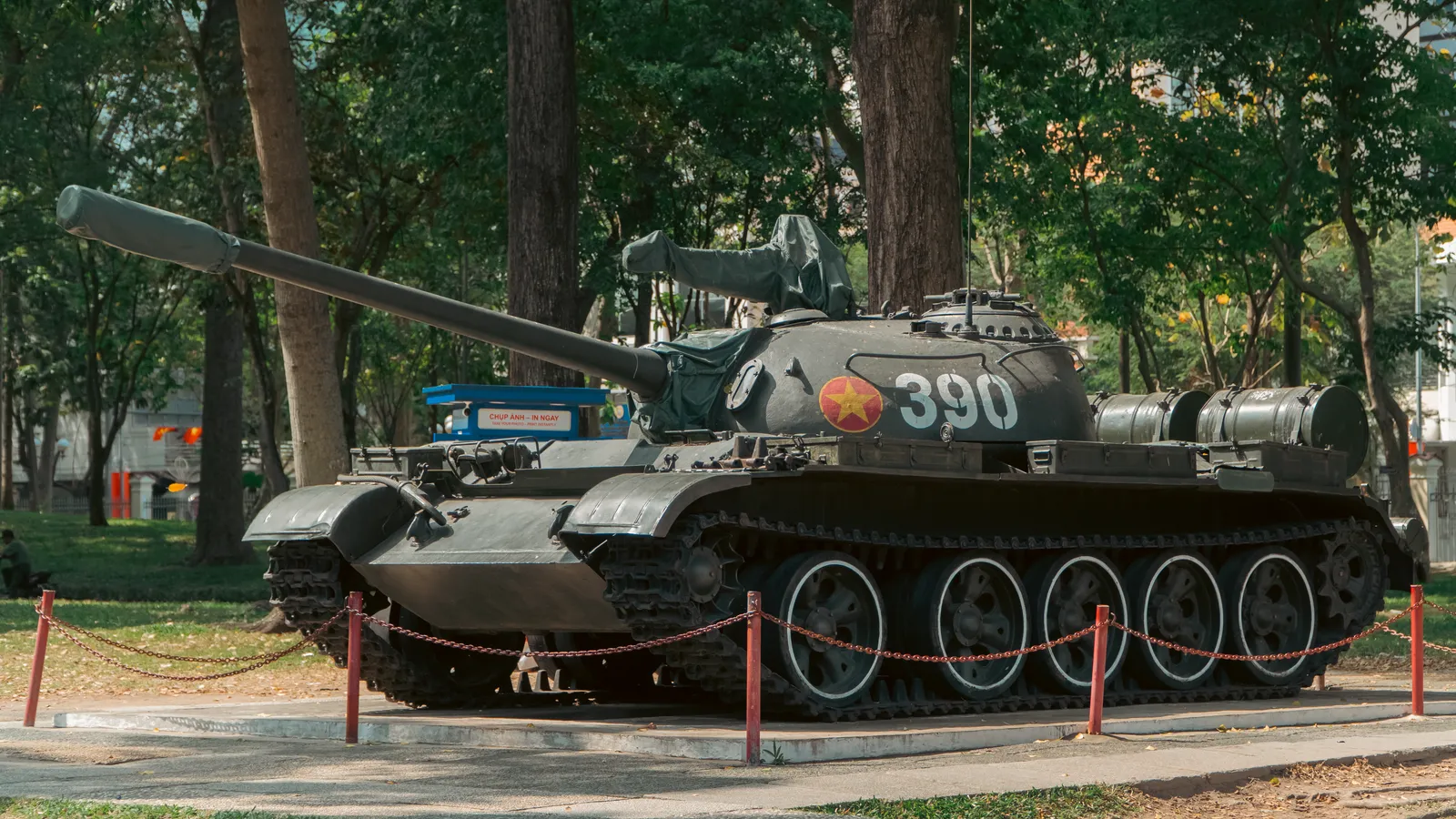
The building spreads across several floors and an outdoor courtyard. The courtyard holds preserved American military aircraft, tanks and artillery, a striking and fairly accessible starting point before the indoor exhibits become more difficult. Indoor galleries cover the course of the war chronologically, the international anti-war movement, and, in the museum’s most difficult section, the effects of Agent Orange and other chemical defoliants on Vietnamese civilians and the environment, including photographs of birth defects and lasting health impacts that continue across generations.
A genuine content warning. The chemical weapons and war crimes rooms in particular contain graphic photographs of injuries, casualties and birth defects that many visitors find distressing, and that are not suitable for young children. There is no obligation to walk through every room. If you know this kind of material affects you strongly, it is entirely reasonable to move through those specific galleries quickly, or to skip a room altogether and rejoin the route further on.
Most visitors spend around one and a half to two hours here at a comfortable pace. It is not a museum to slot into the last thirty minutes before closing; give it room in your day.
Reunification Palace
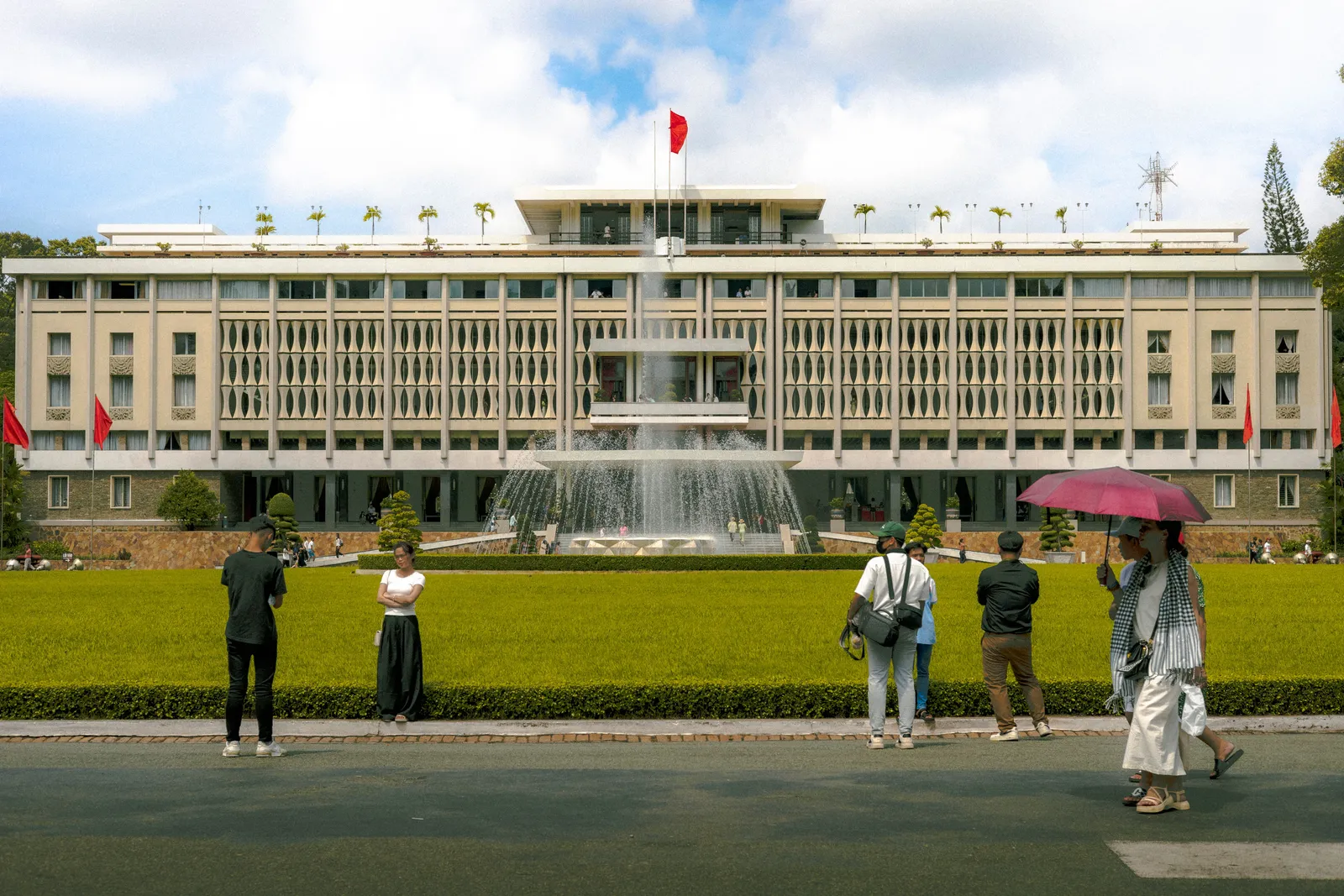
A short distance away, the Reunification Palace covers different ground. It was the seat of government for the former South Vietnamese state, and it is best known as the site of the war’s symbolic end on 30 April 1975, when a North Vietnamese tank broke through its front gates.
The building is preserved largely as it stood at that moment: period reception rooms, a cabinet room, a rooftop helicopter pad, and a basement level of war rooms and communications equipment used during the conflict, laid out much as they were left. It is a striking piece of mid-twentieth-century architecture in its own right, and touring it gives a different, more procedural sense of the war’s final chapter than the War Remnants Museum’s focus on civilian impact.
The palace is generally a lighter, less emotionally demanding visit than the museum, and pairing the two gives a fuller picture: one focused on the human cost, the other on the political and military endgame.
See both sites with contextA guided half-day city tour can cover the War Remnants Museum and Reunification Palace with historical background included.Visiting respectfully
A few things are worth keeping in mind, at both sites and elsewhere in the city where the war’s history surfaces.
This is recent history for many people you will meet. The war ended within living memory, and Vietnamese staff, guides and fellow visitors may have direct family connections to it. A quiet, attentive manner goes further here than at a typical tourist attraction.
It is presented from one side, and that is worth acknowledging rather than arguing with in the moment. The War Remnants Museum in particular does not offer a balanced, all-sides account, and treating a visit as an opportunity to litigate the politics of the war with museum staff or guides is neither useful nor welcome. Reading, absorbing and reflecting afterwards is the more productive approach.
Photography is generally allowed but use judgement. Most rooms permit photographs, though some specific exhibits restrict it and signage will tell you. Being thoughtful about whether to photograph genuinely distressing material, rather than doing so reflexively, is a matter of basic respect.
Give yourself time to decompress afterwards. Both sites can be emotionally heavy, particularly the War Remnants Museum, and scheduling something lighter immediately afterwards, rather than another intense historical site, tends to make for a better day.
Planning your visit
Both sites sit within central Ho Chi Minh City and are commonly visited on the same day, either independently or as part of an organised half-day tour that adds historical context along the way. Allow roughly half a day for the pair if you want to see both properly rather than rushing.
They also pair naturally with a trip out to the Cu Chi Tunnels, the underground tunnel network used during the war on the city’s outskirts, if you want to build a fuller day around this period of history, though that is generally best kept as a separate day given how much ground the tunnels cover on their own. For where to stay while you cover the city’s central sights, our Ho Chi Minh City accommodation guide breaks down the main areas to base yourself.
The honest take
Neither of these sites is a comfortable visit in the way a temple or a market is, and they are not meant to be. They are among the most direct ways to understand what Vietnam experienced during a war that shaped the country you are travelling through, told largely from the perspective of the people who lived it. Go in prepared for what you will see, take the content warning seriously if graphic imagery is something you find difficult, and give the experience the unhurried attention it asks for.