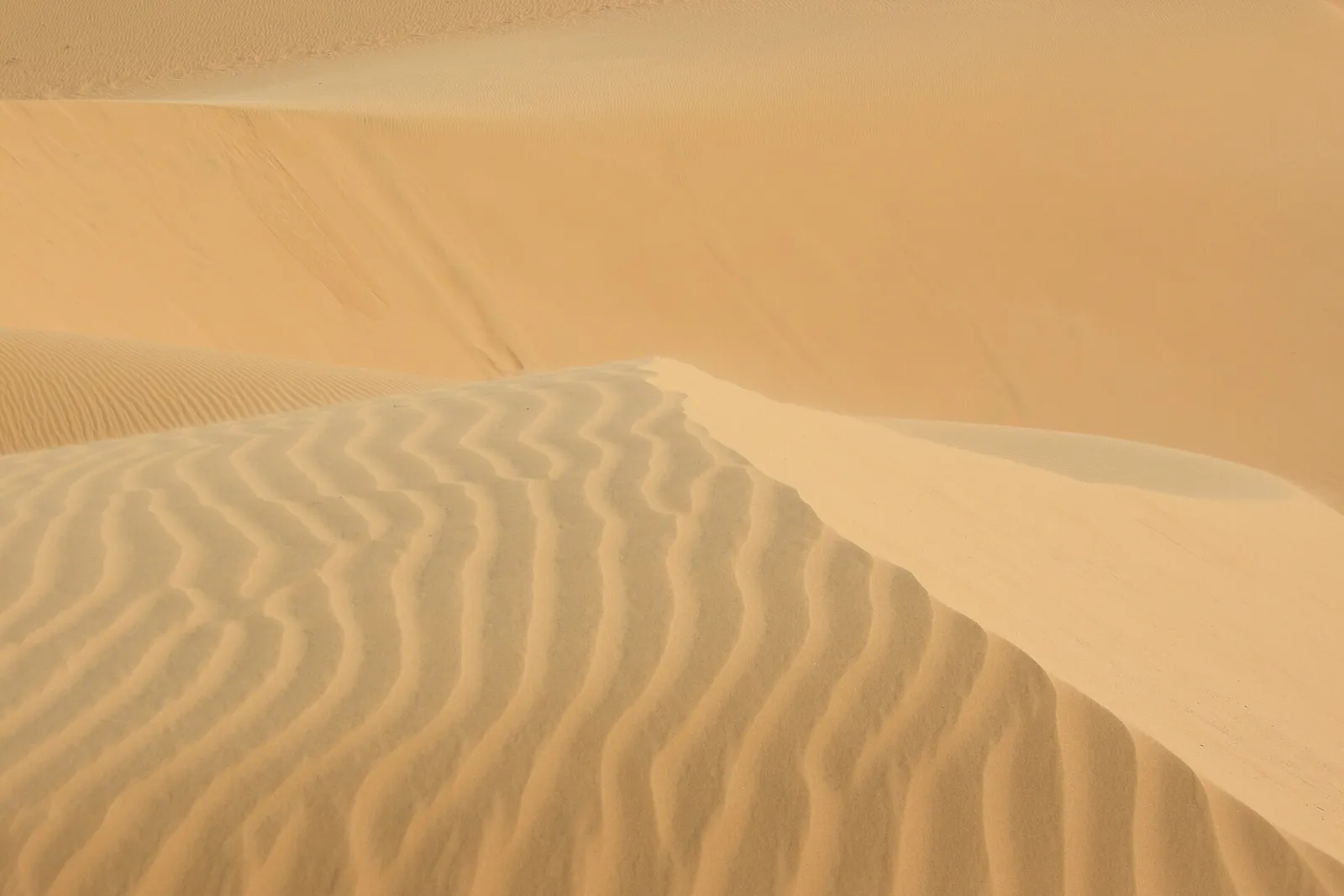
Mui Ne looks like nowhere else on Vietnam’s coast. Instead of jungle running down to the water, the land behind the beach turns to open sand: red and white dunes that would not look out of place in a real desert, and a wind that blows hard enough to have built an entire industry around it. This is Vietnam’s kitesurfing town, and it rewards travellers who come for the wind and the strange scenery more than for a picture-perfect swimming beach. Here is how to plan around what actually makes it worth the detour.
Why Mui Ne is different from the rest of the coast
Mui Ne is not a town in the postcard sense. It is a single coastal road, Nguyen Dinh Chieu Street, running for several kilometres between the fishing village at one end and open dune country at the other, lined with resorts, kite schools and seafood restaurants rather than an old quarter or a central square. First time visitors sometimes expect something closer to a lantern lit old town and are thrown by the strip mall geography, so it helps to arrive knowing this is a functional resort town built for wind sports and day trips, not a place you wander for its own charm. What makes the detour worthwhile sits just outside town: the dunes, a shallow canyon stream, and a bay that turns into one of Southeast Asia’s better kitesurfing spots for roughly half the year.
The red and white sand dunes
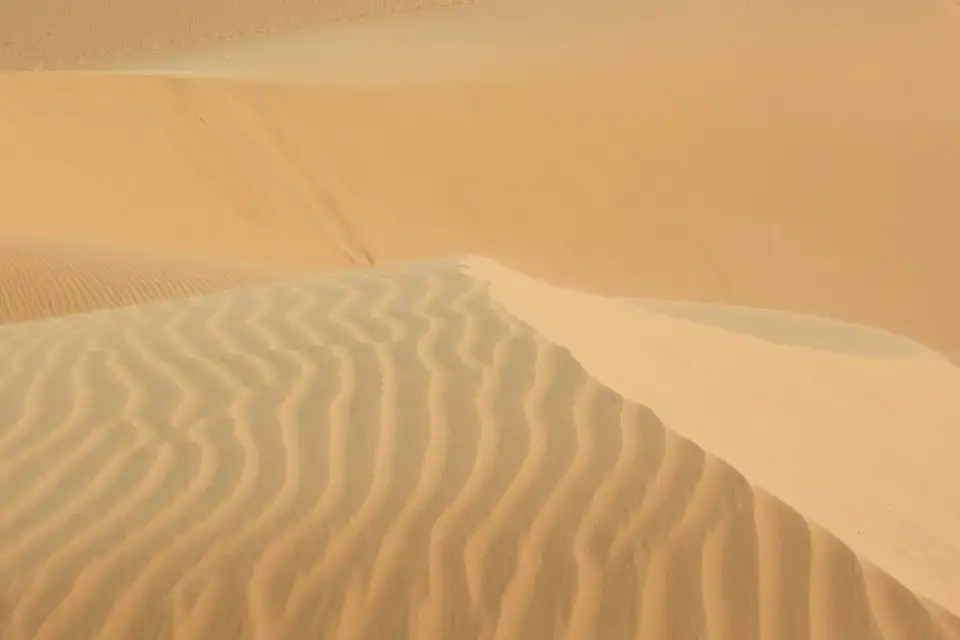
Mui Ne’s dunes are its signature, and they come as two separate, unrelated sites rather than one. The red dunes sit close to town, compact and easy to fold into a short sunrise or sunset visit, their rust coloured slopes glowing in low light before the heat and the crowds arrive. The white dunes lie further out toward Phan Thiet and are considerably bigger, tall open slopes that feel like a genuine stretch of desert rather than a curiosity beside a beach resort. Renting a quad bike or sliding down on a hired plastic sledge is the standard activity there. Most visitors see both dune fields and the fishing village in one early loop by jeep or motorbike, since sunrise brings the best light, the coolest air and sand that has not yet been tracked over by the day’s visitors.
The Fairy Stream and the fishing village
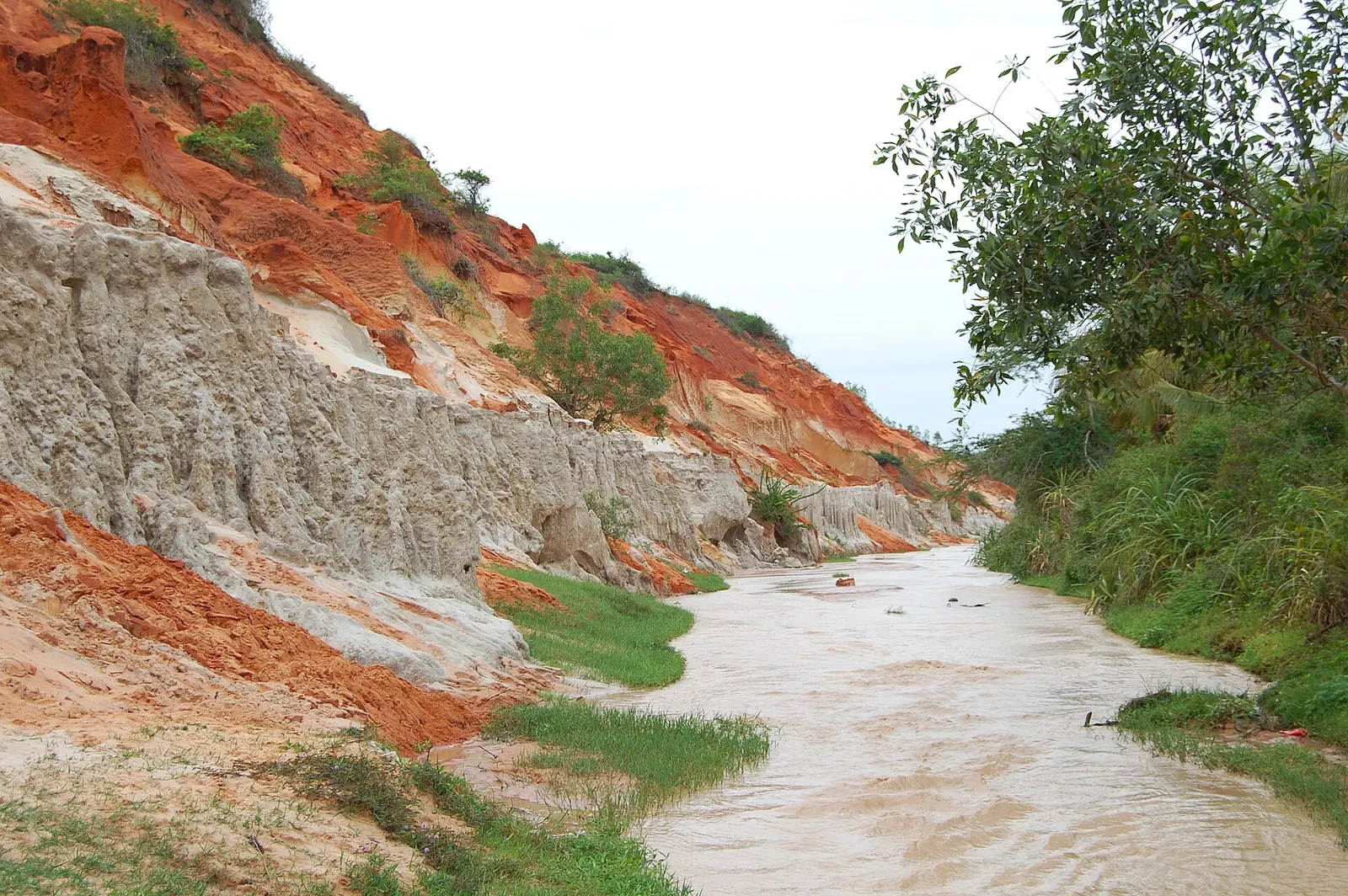
Suoi Tien, the Fairy Stream, is Mui Ne’s gentlest attraction: a shallow, ankle deep stream that winds through a small canyon of eroded orange and white clay cliffs a short walk from the road. You wade up it barefoot rather than walk beside it, past formations shaped by the water and a small waterfall near the top, and the round trip takes about an hour. Bring sandals you do not mind getting wet and leave your shoes in the car.
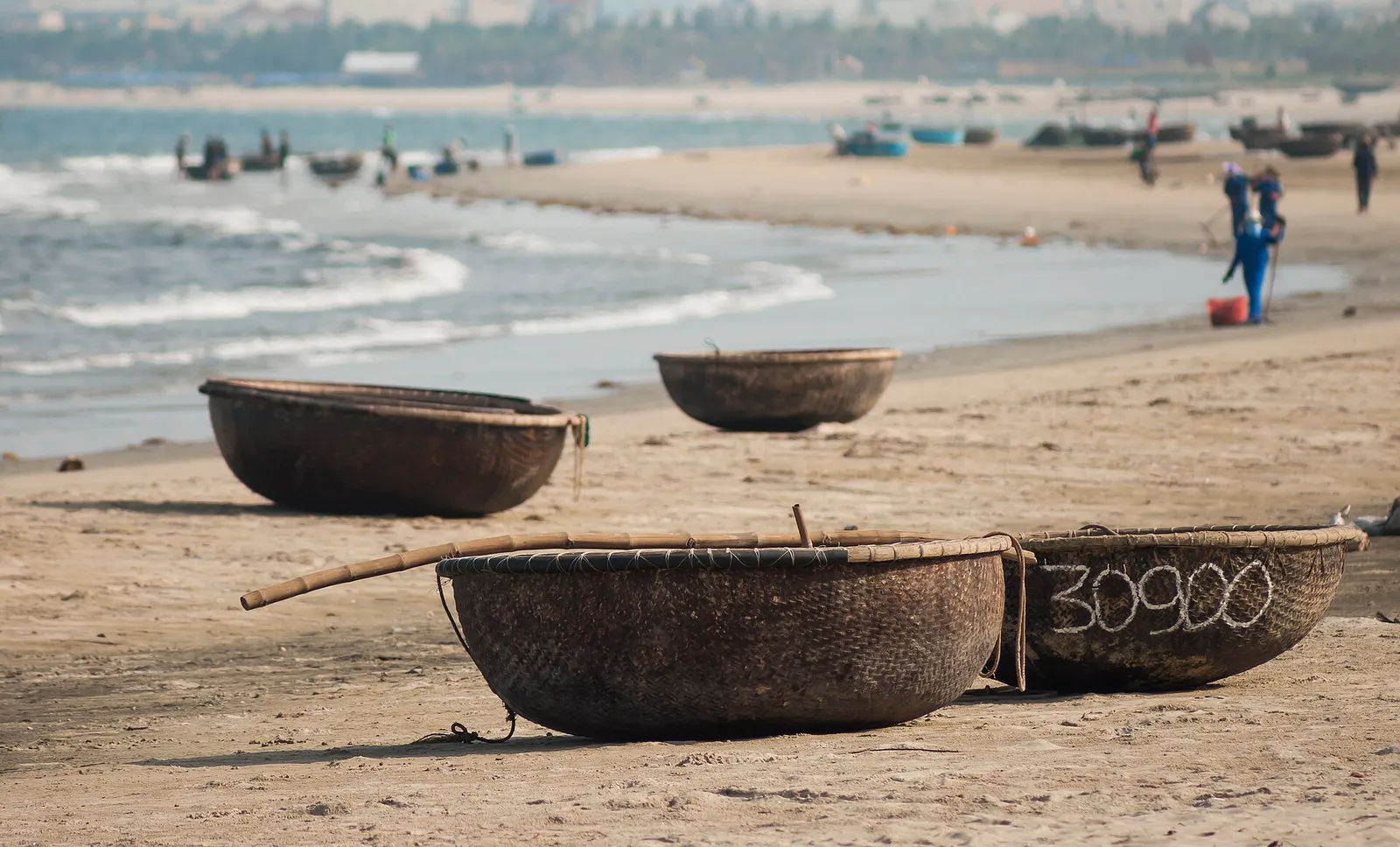
At the other end of the strip, Mui Ne’s original fishing village is still a working harbour, busiest at dawn when boats come in and the catch is sorted on the sand. Round bamboo coracle boats are a classic sight along this coast, woven baskets used as small fishing craft, and a walk through the village gives a sense of what the coast looked like before the kite schools arrived.
Wind, kitesurfing and the honest trade-off
Wind is the reason Mui Ne exists as a resort town, and it is also the thing to plan your trip around honestly. From roughly November to March, a steady northeast wind sets in most afternoons, strong and dependable enough to have made this one of the better places in Southeast Asia to learn kitesurfing or windsurfing, with schools along the strip running multi-day beginner courses and renting equipment to more experienced riders.
Compare kitesurfing courses before you bookMulti day beginner packages vary in group size and gear included, worth checking firstThe trade-off is the one thing most first time visitors do not expect: the same wind that fills the kites also roughens the sea along the main strip, so this is not the calm, glassy water you would want for a lazy swim. Swimmers do better in the quieter pockets at either end of the bay or in a resort pool, and outside the windy months the water settles while the kitesurfing gets far less reliable. Since the two seasons pull in opposite directions, it is worth deciding which one matters more before you pick your dates, and our guide to the best time to visit Vietnam is a useful place to check how Mui Ne’s wind season lines up with the rest of the country. If calm water for swimming matters more to you than wind, Nha Trang, further up the coast, is the easier choice.
Planning your days, staying and eating
A loop that works well: head out before dawn for the white dunes, the red dunes, the Fairy Stream and the fishing village, then come back for a late breakfast and spend the rest of the day on the beach or by the pool. On a second day, take a kitesurfing or windsurfing lesson if that is why you came, or hire a motorbike for an independent ride along the coast and past the dragon fruit farms inland. One night is enough if you are only breaking up a longer drive, but plan on two to three nights to fit in the dunes, the water and some rest, and longer again if you are working through a multi-day kitesurfing course.
Accommodation runs the length of the strip, and where you stay changes the trip. The eastern end near the fishing village is quieter and more local, while the central stretch is closer to the restaurants and kite schools, with more traffic in exchange. A simple double room near the beach starts at roughly a few hundred thousand dong a night in the quieter months and rises from there in peak season, so it is worth comparing current listings rather than assuming a fixed rate. For food, the seafood restaurants along the strip are the main draw, and it is worth asking the price before you order at any stall that does not post one.
Fitting Mui Ne into a route
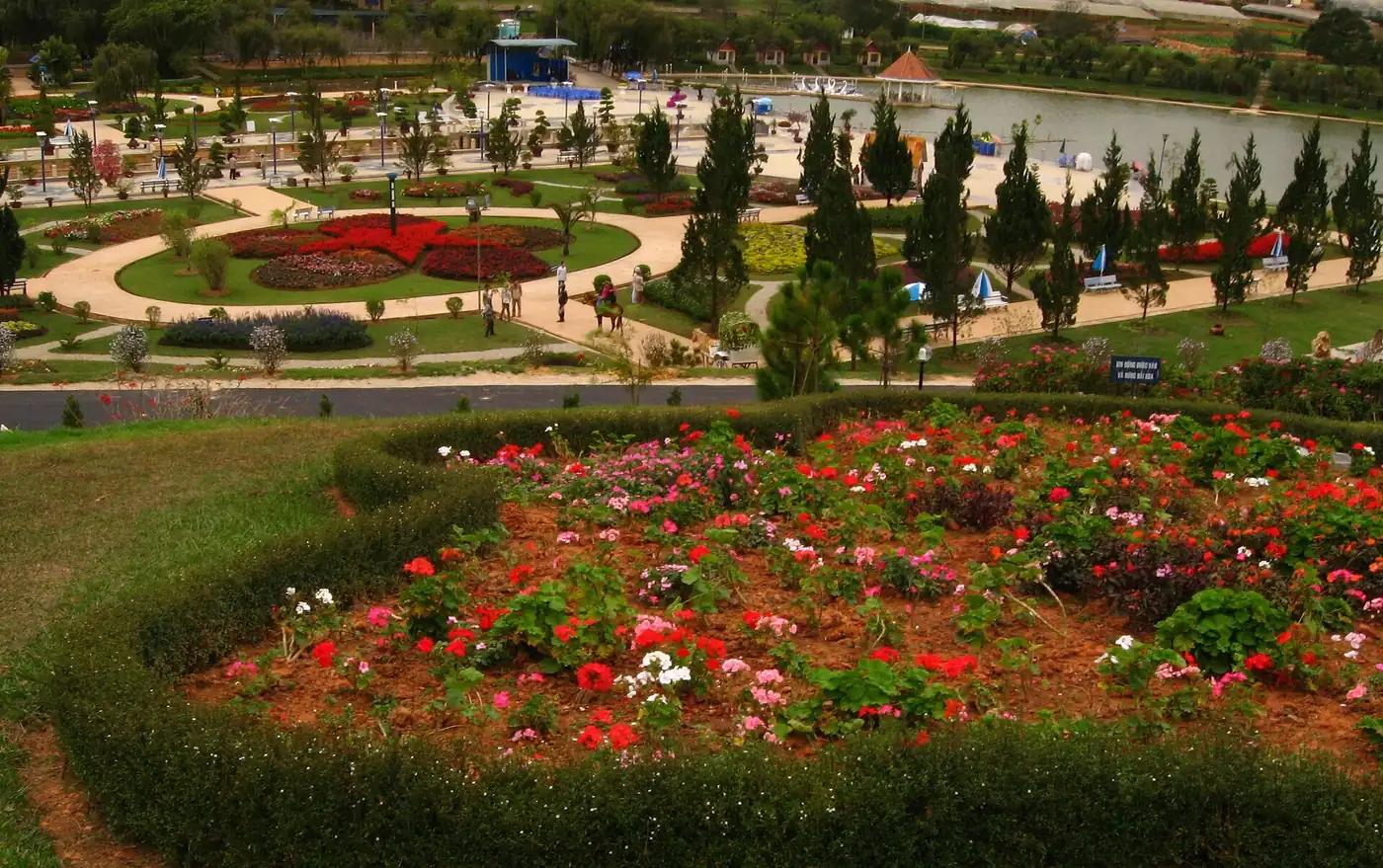
Mui Ne works best as a connector rather than a standalone destination. Heading inland, the classic pairing climbs from the heat of the coast to the cool pine forests of Da Lat, a drive of roughly three to four hours through genuinely scenic mountain roads that trades sand for jackets in the evening. Heading up the coast instead keeps the beach theme going toward the islands and diving further north. Many travellers begin in Ho Chi Minh City, stop in Mui Ne for a night or two, and then pick one direction or the other, which is exactly how a town built around a single road and a strong wind earns its place on a longer itinerary.