Hanoi does not try to out-shout the neon and the superclubs further south, and that restraint is exactly what makes its nights worth having.
Where Ho Chi Minh City goes loud with rooftop bars and late-running dance floors, a pattern covered in our Vietnam nightlife guide, a night out in the capital is smaller and street-level. It starts on a plastic stool on a beer-soaked pavement, drifts up a dark staircase to an unmarked cocktail bar, and often ends with live jazz in a room the size of a living room. This is a more conservative, earlier city than Saigon, and travellers who read it right get one of the most genuinely Vietnamese evenings in the country.
Ta Hien Street, where every night starts
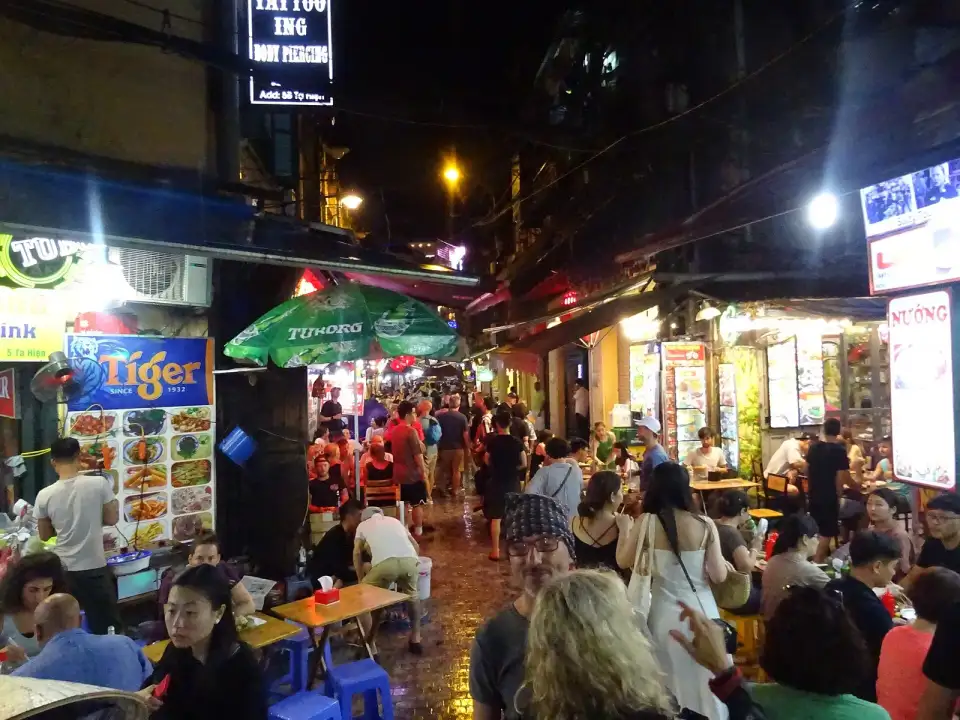
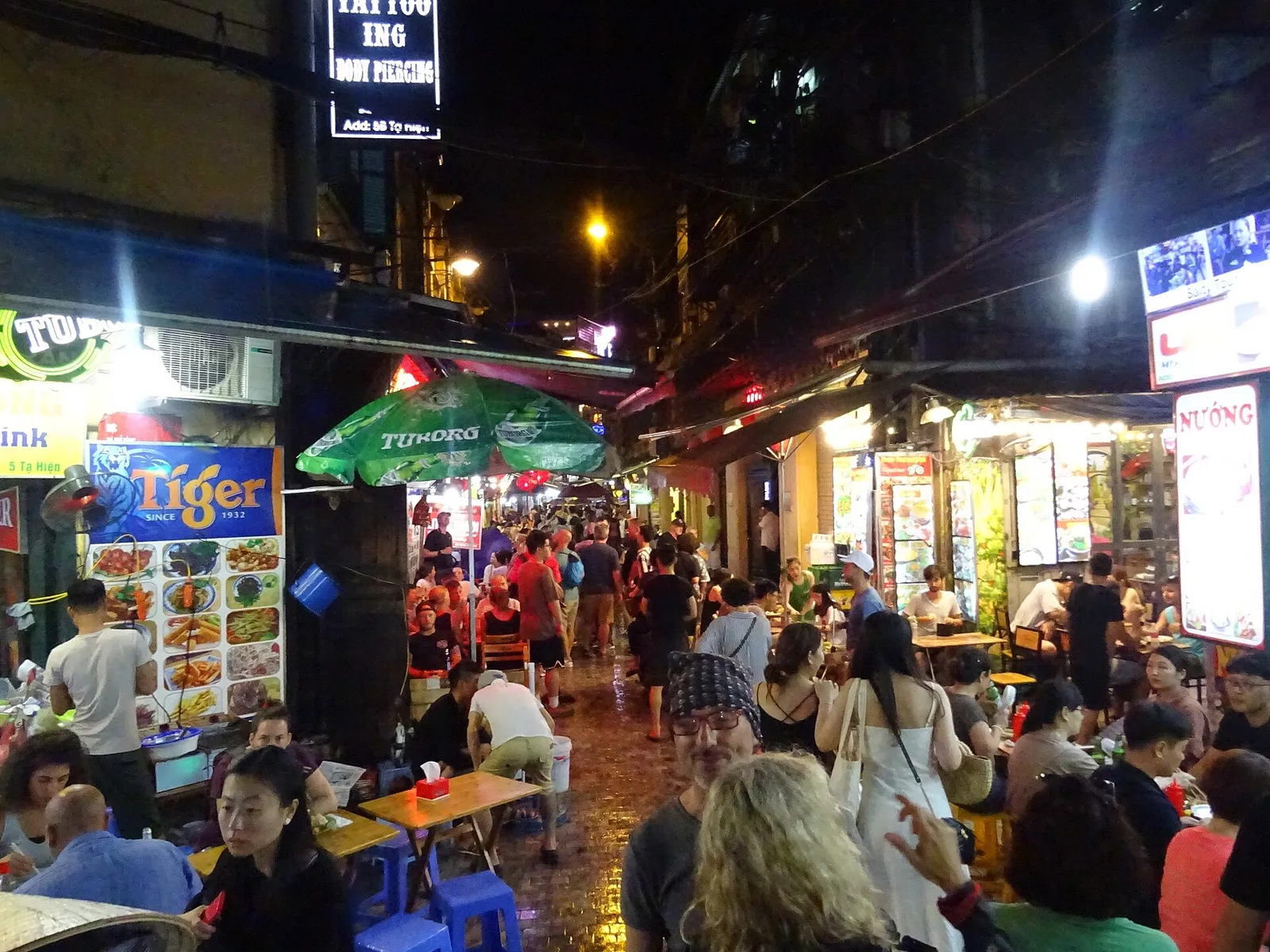
If Hanoi’s nightlife has one heart, it beats on Ta Hien Street, the narrow lane in the Old Quarter that everyone calls Beer Street. From early evening the alley fills with rows of low plastic stools under a canopy of red neon. The drink of choice is bia hoi, fresh local draught beer brewed and delivered the same day, priced like a misprint, somewhere around 10,000 to 20,000 dong a glass.
The appeal has little to do with the beer and everything to do with the energy: you sit almost in the road, clink glasses with strangers from a dozen countries, and watch servers weave through the crowd with trays stacked high. Arrive as the street starts to fill. Once you have had a glass or two, a walk through the Old Quarter’s street food scene is the natural next move.
Beer prices barely change from stool to stool, so skip the comparison shopping. Snacks are different: extras sometimes land on your table uninvited and get added to the bill, so confirm the price first, or wave them away.
Beyond the street: hidden bars, jazz and craft beer
Ta Hien is only the opening act. The rest of Hanoi’s night scene hides a floor up, or behind a door with no sign at all.
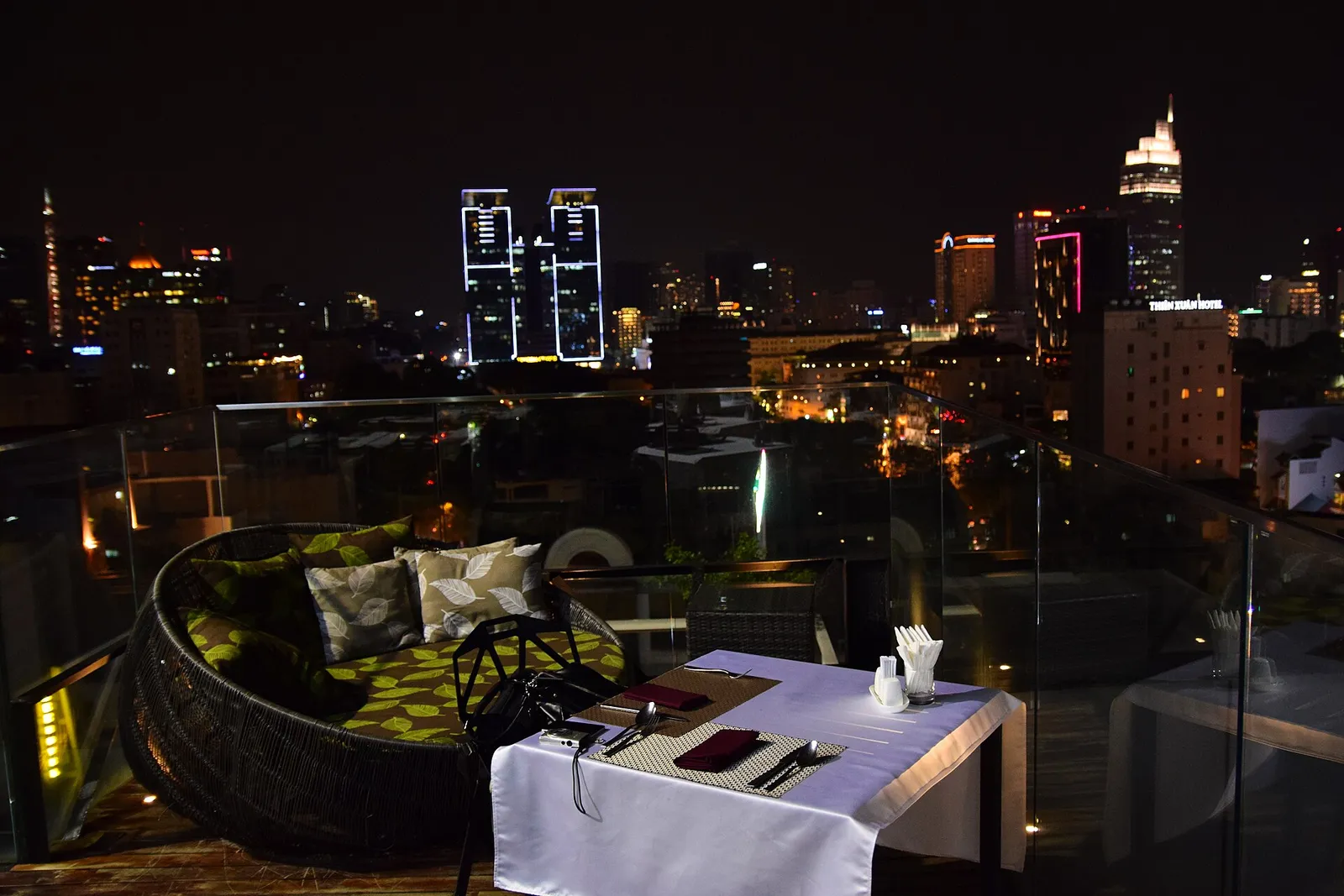
Around Hoan Kiem Lake, rooftop bars and elevated cafes look out over the water and the lit-up city, calmer and more romantic than rowdy, and pricier for the view, typically somewhere around 120,000 to 200,000 dong a drink.
Hidden cocktail bars are one of the city’s real growth stories, tucked behind unmarked shopfronts or up unsigned staircases in the spirit of an old speakeasy. Venues change often enough that any specific recommendation goes stale fast, so ask at your hotel for whatever is current.
Hanoi also has a genuine live jazz tradition, a handful of long-running clubs with intimate rooms and low light. If bia hoi has worn thin, a growing craft beer scene fills the gap with local IPAs and stouts, usually somewhere around 80,000 to 120,000 dong a glass.
What a night out costs
Budgets here stretch a long way, from Ta Hien’s coin-level prices up to a fully dressed cocktail evening. Treat the numbers below as a rough guide: prices vary by venue and drift over time, so confirm on the night.
| Experience | Typical price | Mood |
|---|---|---|
| Bia hoi on Ta Hien | 10,000 to 20,000 dong | Street level, loud, young |
| Craft beer pub | 80,000 to 120,000 dong | Relaxed, for beer people |
| Live jazz club | 100,000 to 180,000 dong | Intimate, low light |
| Hidden cocktail bar | 150,000 to 250,000 dong | Polished, quiet |
| Rooftop by the lake | 120,000 to 200,000 dong | Romantic, scenic |
A simple formula works: street food around dusk, Ta Hien for a first round, then somewhere quieter, a jazz room or hidden bar, to finish. Staying centrally puts all of it in walking distance, one more reason to base yourself in the Old Quarter itself.
Want a street food and beer walk in Hanoi?A guided evening tasting route, small groupsWhat to drink, and how to order it
Half the fun is knowing what to ask for instead of a menu you cannot read.
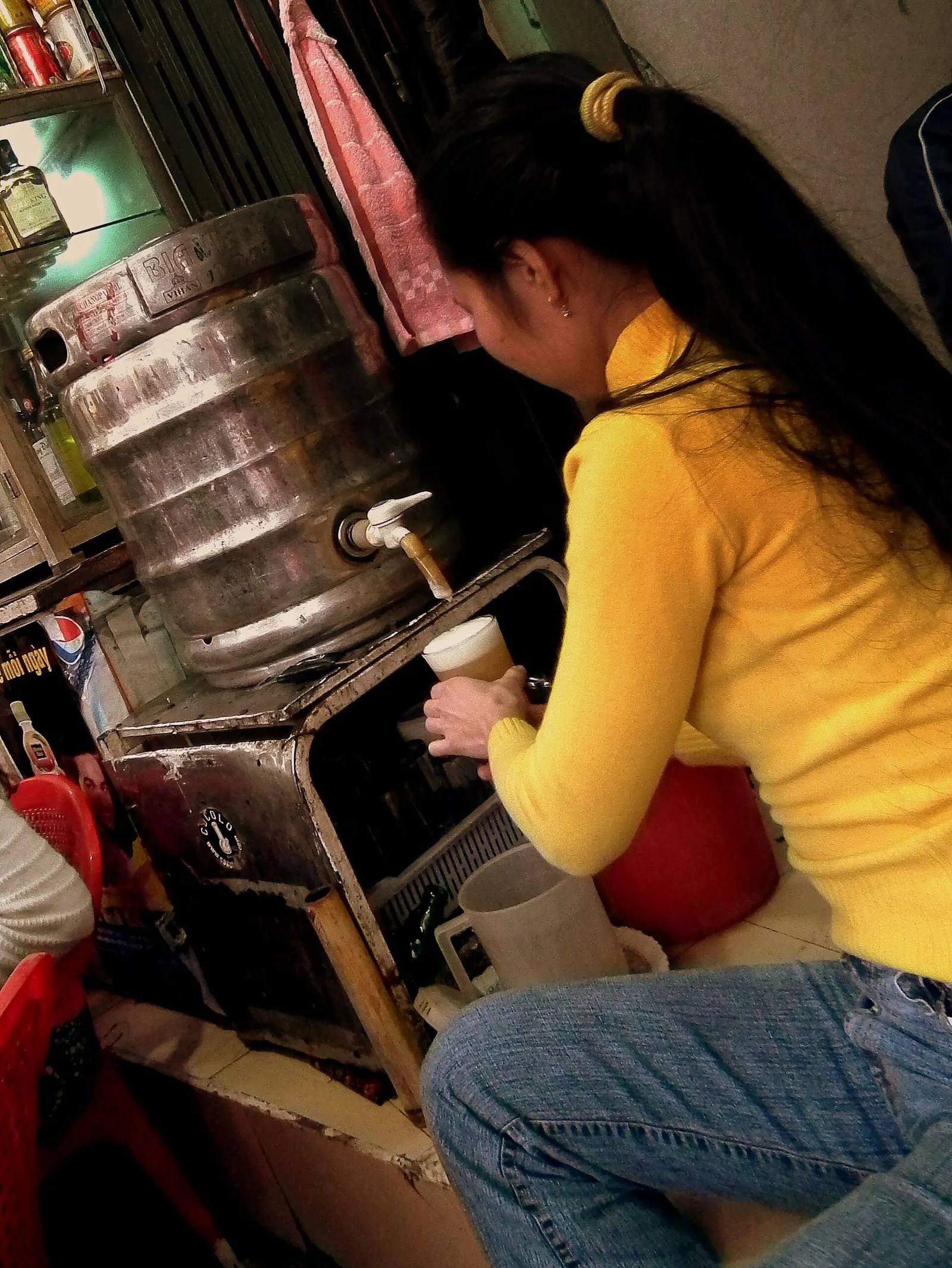
Bia hoi (Bia Hơi). The house drink: light, low-alcohol draught beer, around 3 percent, brewed fresh and delivered daily rather than bottled. Not refined, but cold, cheap and central to the evening. Order a glass by saying “mot coc bia hoi.”
Bottled local beer. For more kick, bottled Vietnamese lagers are widely available, usually somewhere around 25,000 to 40,000 dong a bottle.
Egg coffee, after dark. Hanoi’s famous egg coffee is not only a daytime drink; long-running cafes serve it into the evening, a sweet, non-alcoholic close to a night of beer.
Ruou. A strong local rice spirit, sometimes poured as an unbidden shot at street stalls. It carries a serious kick, so treat it with respect.
Hours, seasons and what to wear
Hanoi is more conservative and earlier than Ho Chi Minh City, and the Old Quarter has at times operated under a rough quiet-hours guideline somewhere around midnight. How strictly that gets enforced swings back and forth over the years and varies by district, season and night of the week. Some weekends the street rolls well past midnight; other nights, especially midweek, it winds down earlier. Do not build your evening around a specific closing time you have read somewhere, and treat a late finish as a bonus, not a guarantee.
Friday and Saturday nights are the busiest on Ta Hien. There is no dress code: street beer is a stools-and-flip-flops affair, and most bars expect nothing smarter than daywear. Season matters more: winter, roughly December to February, turns cold and damp, so bring a layer, while summer swings hot and humid, exactly when a rooftop breeze earns its higher price.
Staying safe after dark
Hanoi is genuinely safe at night, and the crowds still out on the streets in the evening add to that sense of ease. A few habits help.
- Watch your pockets in the crush. Ta Hien gets tightly packed, prime territory for pickpockets. Keep phone and wallet in a front pocket or a bag worn across the body.
- Count your change. Overcharging after a few rounds is the most common issue. Pay with notes close to the exact amount, and count what comes back slowly.
- The real hazard is traffic, not people. Motorbikes weave through crowds and ride onto pavements as freely as the road. Cross carefully and stay alert.
- Book your ride home. Use a ride-hailing app rather than flagging a taxi late at night, so the fare is fixed before you get in.
Hanoi’s nightlife was never going to out-shout Ho Chi Minh City, and it is not trying to. What it offers instead is a plastic stool, a cold glass of bia hoi, a stranger’s smile across a low table, and a quiet finish with a trumpet playing somewhere nearby. Give it one evening, and you will understand why so many travellers rank it above the louder nights further south.